Dear________,
Thank you for thinking of me and extending the invitation to contribute to your project.
Perhaps you are already familiar with the ongoing conversations around precarious labour in both academic and artistic fields, but this is an issue that is very dear to my heart and I made a choice a while ago to not work for free. I’m a bit surprised that a ____________ focused on ______________ would be continuing to perpetuate the idea that working for ‘exposure’ is fair compensation.
Writing, research, editing, _______, ________, and administrating are all WORK. In Canada, we have an organization called CARFAC that sets minimum fees for any kind of artistic work, and in the U.S., W.A.G.E has been advocating for similar practices in museums and institutions there.
Those of us working in the field of _________________ are also affected by the pressures of economic precarity and the undervaluing of our work, whether working in academia, for institutions, or as independent producers. When we work for free, we perpetuate the idea that our labour is not ‘real work’ and reinforce the conditions where only those who can afford to work for free are able to continue. It should go without saying that these labour conditions disproportionately affect women, people of colour, Indigenous, and LGBTQ+ folks.
Perhaps these are issues that you might also consider addressing in your __________.
Best of luck with your project,
__________________
///
Chère ________, Cher ________,
Merci de m’avoir invité·e à participer à votre projet.
Il se peut que vous soyez déjà au courant des réflexions et discussions actuelles autour de la question du travail précaire dans les domaines artistiques et universitaires. C’est un sujet qui me tient à cœur, et, par conséquent, j’ai pris la décision il y a quelque temps de ne plus travailler sans rémunération. Je dois avouer être un peu surpris·e d’apprendre qu’un organisme comme le vôtre, qui prétend porter les valeurs de ____________ et de ____________, entretienne l’idée que la « visibilité » ou ____________ constitue une rémunération équitable pour quelque travail que ce soit.
Qu’il s’agisse de la rédaction, de la recherche, de l’administration ou de _____________ — toutes ces activités constituent du travail, et non pas du bénévolat. Au Quebec et au Canada, des organismes comme le RAAV et le CARFAC établissent des barèmes de rémunération minimale pour le travail artistique et culturel. Dans d’autres pays, ce sont des organismes comme WAGE ou la SAIF qui militent pour la rémunération équitable des travailleurs culturels et artistes.
Ceux d’entre nous qui travaillent dans le domaine de _________________ ressentent sur une base quotidienne les effets de la précarité et de la sous-évaluation de notre travail, que ce soit au sein des organismes culturels, des universités, ou à titre de travailleurs autonomes. Le fait de travailler gratuitement entretient à la fois l’idée que ce que nous faisons ne constitue pas du « vrai travail », et une situation où seuls ceux et celles ayant les moyens de travailler sans rémunération sont en mesure de travailler tout court. Il va sans dire que de telles conditions de travail défavorisent démesurément les femmes, les personnes racisées, les autochtones et les membres des communautés LGBTQ+.
Ce sont des questions auxquelles votre organisme est peut-être déjà en train de réfléchir.
Je vous souhaite la meilleure des chances avec votre projet.
Cordialement,
___________
—
**Thanks to everyone who has shared and commented on this letter. Please feel free to use, adapt, circulate. I am also open to feedback on how to improve/strengthen the wording. This letter was informed by ongoing conversations I’ve been having about artistic/academic labour with other cultural workers. There are lots of groups out there working on these issues already, so please check out the links below to see some of the sources. Merci à Simon Brown pour la traduction.**
Carrot Workers
Precarious Workers Brigade
Republicart
FUSE’s final issue
Should I Work For Free
Hyperallergic article on WAGE
Sarah Wookey’s letter
Broken City Lab
Ragpickers
BFAMFAPHD
Who Pays Artists, Bad At Sports
Standard Deviation
Art Work
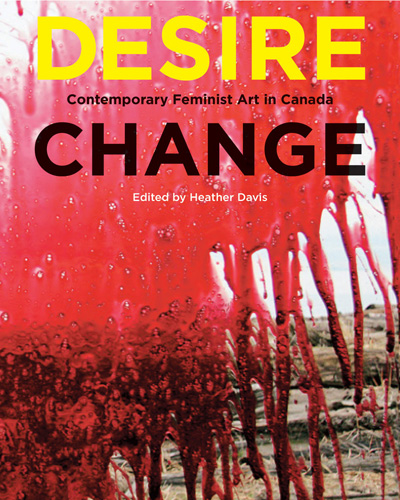
 “In Craft Hard Die Free: Radical Curatorial Strategies for Craftivism, Anthea Black and Nicole Burisch provide a brief international survey of activities which seek to deploy craft for the purposes of protest. Knitting, and other textile arts traditionally associated with communal crafting, plays the leading role. The concept of the ‘revolutionary knitting circle’ recalls the 1970s feminist use of a similar group exchange as a form of consciousness raising. Black and Burisch also cite the AIDS Quilt project of the 1980s as an important precursor for the present moment. So much for precedents, what about the future? Clearly, efficacy and identity are interwoven in this essay, which takes for granted another 70s concept–that the personal is political–and offers real-world strategies for [maintaining] the efficacy of symbolic craft. It is too early to say whether craftivism will have staying power in the cultural imagination, like the Arts and Crafts, studio and countercultural craft movements before it. But there is little doubt that Black, Burisch and their peers have breathed new life into this old set of ideas.”
 Nicole Burisch