
Lancement
Lieu : atelier b. (5758 boul. Saint-Laurent, Montréal)
Date : le vendredi 23 août, dès 17 h.
événement facebook
Les textes de Nicole Burisch et d’Andréanne Godin se rencontrent autour de souvenirs de la maison et du territoire originels, d’où s’étaient tissés des liens solides en apparence qui, avec le temps, se sont fragilisés, dénoués, puis reformés.
Cette publication est la deuxième parution de Mille-feuille, projet de micro-édition de courts textes littéraires et poétiques faisant écho à des œuvres d’arts visuels. Pour cette édition, Nicole Burisch a été invitée à écrire un texte en réponse à l’œuvre de l’artiste Andréanne Godin.
*
Launch
Place : atelier b. (5758 boul. Saint-Laurent, Montréal)
Date : Friday August 23, at 5pm.
Facebook event
Texts by Nicole Burisch and Andréanne Godin converge around recollections of home and landscape, places with which seemingly solid ties were woven—ties which over time became fragile, came undone, and then re-formed.
This publication is the second issue of Mille-feuille, a micro-publishing project that presents short literary and poetic texts that respond to works of visual art. For this issue, Nicole Burisch was invited to write a text in response to a work by the artist Andréanne Godin.
renseignements / information
mille-feuilles.ca
info@mille-feuilles.ca
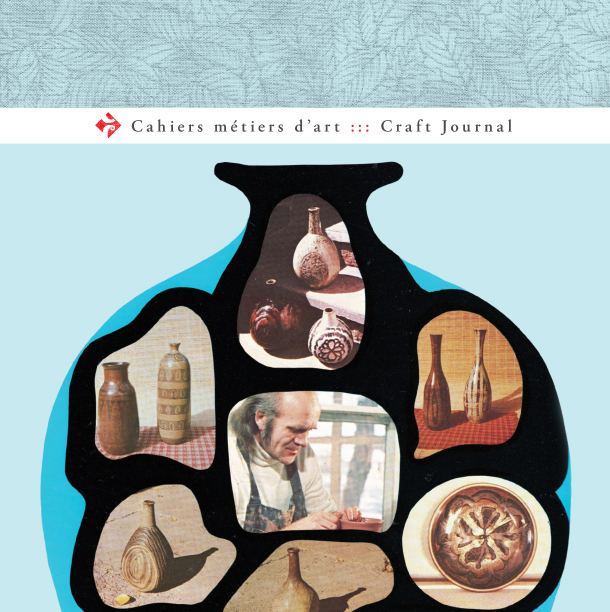
 “In Craft Hard Die Free: Radical Curatorial Strategies for Craftivism, Anthea Black and Nicole Burisch provide a brief international survey of activities which seek to deploy craft for the purposes of protest. Knitting, and other textile arts traditionally associated with communal crafting, plays the leading role. The concept of the ‘revolutionary knitting circle’ recalls the 1970s feminist use of a similar group exchange as a form of consciousness raising. Black and Burisch also cite the AIDS Quilt project of the 1980s as an important precursor for the present moment. So much for precedents, what about the future? Clearly, efficacy and identity are interwoven in this essay, which takes for granted another 70s concept–that the personal is political–and offers real-world strategies for [maintaining] the efficacy of symbolic craft. It is too early to say whether craftivism will have staying power in the cultural imagination, like the Arts and Crafts, studio and countercultural craft movements before it. But there is little doubt that Black, Burisch and their peers have breathed new life into this old set of ideas.”
 Nicole Burisch